-
Vendor: Lenslott
Bunny | Little Kids Flexible Rectangle Screwless Glasses - Monoflex
Built for active little kids, Bunny combines a flexible TPE rectangle frame with a one-piece screwless construction and an adjustable elastic headband. The 44-15-120 size is designed for smaller faces, while the low-bridge shape and lightweight frame help the glasses stay comfortable during everyday...- $89.00
- $89.00
- Unit price
- per
-
Black
-
Navy
-
Rose
-
Light Blue
-
Vendor: Lenslott
Cub | Little Kids Ultra-Flexible Rectangle Screwless Glasses - Pureflex
Designed for active little learners, these ultra-flexible rectangle glasses provide the comfort, durability, and security children need every day. The lightweight screwless frame bends and flexes with growing kids while maintaining a comfortable fit throughout school, playtime, and family adventures. An adjustable sports strap...- $89.00
- $89.00
- Unit price
- per
-
Pink
-
Light Blue
-
Navy
-
Purple
-
Vendor: Lenslott
Panda | Little Kids Ultra-Flexible Round Screwless Glasses - Pureflex
Panda by Pureflex is a flexible round prescription frame for children’s everyday wear. Its screwless design, detachable temple arms and adjustable strap provide practical options when choosing a frame for school and home. Round shape: a simple rounded front in several two-tone color choices....- $89.00
- $89.00
- Unit price
- per
-
Pink
-
Light Blue
-
Navy
-
Purple
-
Vendor: Lenslott
Fawn | Little Kids Ultra-Flexible Oval Silicone Glasses - Pureflex
Fawn by Pureflex is an oval silicone prescription frame for children’s everyday wear. The soft, flexible design offers an alternative to firmer frame styles, with detachable temple arms and a simple rounded profile for school and home routines. Oval shape: a softer outline for...- $89.00
- $89.00
- Unit price
- per
-
Black
-
Light Blue
-
Purple
-
Vendor: Lenslott
Pony | Little Kids Round Glasses with Spring Hinges - MiniMuse
Discover the well-suited blend of style and peace of mind with our Minimuse kids round glasses, crafted specifically for active children aged 4 to 6. Designed with a warm, fashion-forward clear aesthetic, these flexible kids frames prioritize your child's versatile comfort and everyday safety....- $89.00
- $89.00
- Unit price
- per
-
Purple
-
Pink
-
Black
-
Brown
-
Vendor: Lenslott
Joey | Little Kids Flexible Round Prescription Glasses - MyoGuard
Give your little one the well-suited blend of advanced vision care and playground-proof durability. Part of our specialized MyoGuard series, these round kids flexible prescription glasses are securely sized for children ages 4 to 6 and explicitly engineered to support specialized prescription lens options...- $89.00
- $89.00
- Unit price
- per
-
Black
-
Grey
-
Purple
-
Blue


The Lenslott collection
Ages 4-6 (41-45mm)
Compare everyday prescription frames grouped for ages 4–6. Use the 41–45 mm lens-width range as a browsing reference, alongside bridge width and temple length. Explore the listed shapes and features, and check each product’s measurements rather than choosing by age alone.


Little kids · Everyday prescription eyewear
Prescription Glasses for Little Kids
Explore kids' prescription glasses in round, oval and rectangular styles. This collection is grouped for ages 4–6, with lens widths from 41 to 45 mm. Start with the full frame measurements—not age alone—to compare options for school, reading and everyday wear.
A closer look at fit
Compare Little-Kids Frames Beyond Lens Width
Frames with similar lens widths can fit differently. Bunny rectangle frames measure 44–15–120 mm, Panda round frames are 42–14–130 mm, and the Pony spring-hinge style is 45–18–135 mm. These numbers describe lens width, bridge width and temple length; they are not interchangeable sizes.
Compare the measurements with a pair that fits reasonably well. Check each model's strap, hinge and detachable-part details, and ask an optical professional about adjustments rather than bending the frame at home.
Use our kids' glasses size measurement guide to get started. Before ordering, review the selected model's available prescription-lens options and complete price.
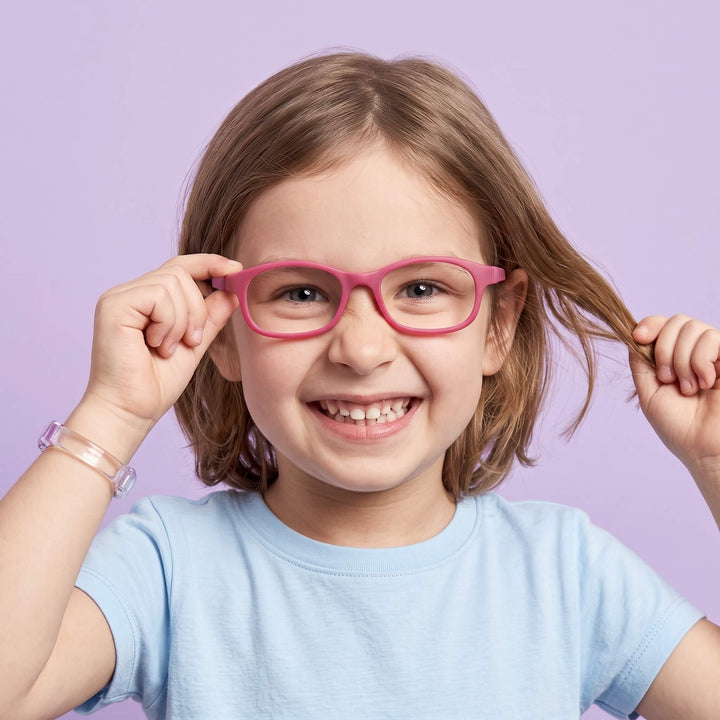
Little-Kids Glasses FAQs
Practical starting points for choosing frames for school days, reading time and everyday routines.
My child is between age groups. Where should I start?
Use age as a browsing guide, then compare the full frame measurements with a pair that fits reasonably well. Children of the same age can need different sizes. Our measurement guide explains what to record before comparing frames.
Two frames have a similar lens width. Will they fit the same?
Not necessarily. Bridge width, temple length and frame shape also matter. For example, Bunny is 44–15–120 mm while Pony is 45–18–135 mm. Compare all three measurements and check how the bridge and arms sit—not just the number for lens width.
What should I check for school and reading time?
Look beyond a still photo. Check whether the frame feels comfortable when your child looks down or smiles, and whether the bridge and temples sit without obvious pressure. If the glasses keep slipping or feel uncomfortable, ask an optical professional for fitting advice.
Would a strap help when my child is moving around?
Some models, including Bunny and Panda, list an adjustable strap. Check the individual product page for the included parts and use instructions. A strap should not be used to compensate for a frame that is the wrong size.
Should we choose round, oval or rectangular frames?
Start with fit, then involve your child in choosing a shape and color they enjoy. This collection includes all three shapes, but shape alone does not determine comfort. Compare measurements and check the current color options on each product page.
What should I review before ordering prescription glasses online?
Check the frame measurements, your child's current prescription requirements, the available lens options and the full selected price. Review delivery and return information before checkout. If you are unsure whether a frame or lens option suits the prescription, ask an optical professional before placing the order.
- Choosing a selection results in a full page refresh.
